
- News
- India News
- 10 key challenges for Mallikarjun Kharge, the new Congress president
Trending
This story is from October 19, 2022
10 key challenges for Mallikarjun Kharge, the new Congress president
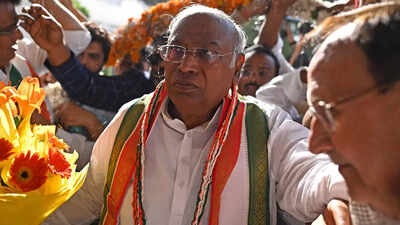
NEW DELHI: In a party that has remained firmly in the grips of the Gandhis for nearly 24 years, Mallikarjun Kharge has surely created a history of sorts.
On Wednesday, the 80-year-old veteran politician from Karnataka secured an easy victory against Shashi Tharoor to take the reins of India's second-largest political party from the Gandhis.
Seen as the "hand"-picked candidate from Day 1 — both literally and figuratively — Kharge's path to Congress leadership was rather simple.
Here are the key challenges that lie ahead for Congress president Kharge:
 Tap to expand and read more
Baptism by fire


Another important and immediate task for Kharge would be to settle the infighting in Rajasthan, the shadow of which loomed large even during the Congress presidential elections.
Chief minister Ashok Gehlot and his former deputy and bete noire Sachin Pilot are locked in a fierce tussle for the top post in the state.
Kharge will have to decide on the fate of Gehlot, who was the frontrunner for the party chief's post till a rebellion by his supporters in Rajasthan forced him to opt out.
Gehlot's loyalists were firmly against Pilot's elevation as chief minister and staged a rebellion when there was talk of possible succession if the Rajasthan CM threw his hat in the ring for the Congress presidential elections.
Rajasthan remains firmly in his grip.
Earlier this month, Gehlot had said that young leaders will get their chance when the time comes, indicating that he is in no mood to vacate the post anytime soon.
But at the same time, the Congress cannot afford to lose Pilot, who has already threatened to quit once during his rebellion in 2020.
It has already lost one young leader in Jyotiraditya Scindia, whose defection to BJP led to the fall of Congress government in Madhya Pradesh.
For Kharge, the challenge will be to defuse the situation in the state before it turns into yet another full blown crisis like in Punjab.
Fighting the tag of Gandhis' 'remote control'
Congress president or not, Rahul Gandhi has seldom played by the rules of the party.
From tearing up an ordinance in 2013 when Manmohan Singh was PM to appointing his coterie of leaders to key positions, he has remained the de facto boss of the Congress ever since he took the plunge.
Therefore, any key policy change will need Rahul's stamp of approval, especially since Sonia is unwilling to remain at the helm of affairs due to poor health.
For Kharge, this could be a tricky task as playing second fiddle to Rahul will marginalize his importance as the president. In case he wishes to make key organisational changes by himself, he will have to strike a delicate balance to avoid antagonizing the Gandhis.
Rahul Gandhi may have embarked on a multi-state Bharat-jodo mission, but what the grand old party really needs is a Congress-Jodo mission.
Since the 2014 Lok Sabha defeat, the Congress has experienced a mass exodus of senior leaders - the latest being Ghulam Nabi Azad.
At least 460 leaders left Congress between 2014 and 2022.

Around 177 MPs/MLAs left the party during elections, while 222 electoral candidates left the Congress for other parties.
The leaders have quit Congress over multiple issues, from being unhappy with the style of functioning to not getting enough importance in the party.
Eventually, most of these defections have ended up hurting the party in some way or the other.
In the longer run, Kharge will have to find a way to stem these defections and ensure harmony between the old guard and the new.
The Congress, which over the years positioned itself as a secular party, today seems a bit directionless ideologically.
In an effort to counter the BJP, Rahul and other Congress leaders have pivoted to the Soft Hindutva approach in the last few years.
It also forged an alliance with the Shiv Sena in Maharashtra, a party diametrically opposite to Congress's ideals.
But the ideological pivot is a bit half-measured since the party also cannot afford to alienate the minorities - who have been its core voter base for decades.
As Congress president, Kharge will have to find an ideological sweet spot for the party to ensure that it manages to counter the BJP even while retaining the support of its core voter base.
Due to Congress's terminal decline in Indian politics, there has been a huge vacuum in the national political space.
With the BJP rooting itself as a dominant national force, no other party has managed to come close to being a viable alternative.
In the current scenario, the Aam Aadmi Party (AAP) is now slowly emerging as the national alternative - not of BJP but of the Congress.
Like Congress, the AAP also has governments in two states. It is now eyeing gains in Himachal Pradesh and Gujarat.
With more electoral successes, the Arvind Kejriwal-led party can slowly emerge as the principal challenger to the BJP, pipping the Congress in the race.
Kharge's assignment would be to revive Congress as quickly as possible, especially in states where it is in a direct fight with the BJP, and thwart AAP's bid to dislodge it as the prime contender.
The Congress also needs to protect its position as the top opposition party in the country if it hopes to reclaim power someday.
On paper, it is still the biggest vote garner in India after the BJP.
In the 19 assembly elections since 2019, the party has secured over 4.6 crore votes and sent 248 MLAs to various state assemblies.
At the national level too, the Congress is the only party that comes close to being a threat to the BJP. In 2019, it secured nearly 19.5% of the total votes and won 52 seats.
Even though its seat tally is just one-sixth of BJP's 303, the grand old party still ranks as the second best in the country in terms of vote and seat share.
The third-largest party on the list is Mamata Banerjee-led TMC, which won 22 seats with a vote share of just over 4%. Moreover, all the seats won by TMC were in West Bengal.
This shows that Congress has a bigger footprint at the national level than what the numbers show.
However, if the erosion of votes continues and the party fails to consolidate its gain, it will eventually cede the space to some other party. AAP, as mentioned, is already eyeing that spot.
The biggest challenge for Kharge will be the Lok Sabha elections in 2024, which are a little over a year away.
After a massive drubbing in both 2014 and 2019 general elections, Congress will definitely eye a larger seat share in 2024.
As party chief, Kharge will have to take some tough calls on joining alliances.
Opposition leaders like Nitish Kumar, Sharad Pawar and K Chandrashekar Rao are working hard to establish an anti-BJP front comprising major political parties.
Nitish had earlier said that Congress will be an important part of any such front.
Under Kharge, the grand old party will have to deftly handle the task of forming crucial political alliances in a way that benefits the party.
The Congress has been called a sinking ship not just by its political opponents but also by the several leaders who have quit the party in the last few years.
Congress as an organisation has failed to make a mark and has been often missing in action.
The leadership has failed to inspire the cadres and as a result the party may not have enough workers on the ground to implement the revival plan.
The assembly election results in Uttar Pradesh could be a case in point where despite a massive effort by Priyanka Gandhi the party registered one of its worst performances in the state.
Kharge has the tough job of rallying the troops. He will also have to create an organisational apparatus that functions. If Kharge is able to get that done, Congress will have a chance to do well in crucial elections lined up in the next 2-3 years.
On Wednesday, the 80-year-old veteran politician from Karnataka secured an easy victory against Shashi Tharoor to take the reins of India's second-largest political party from the Gandhis.
Seen as the "hand"-picked candidate from Day 1 — both literally and figuratively — Kharge's path to Congress leadership was rather simple.
However, the truly difficult part will be the road ahead.
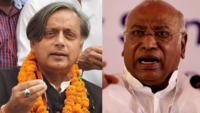
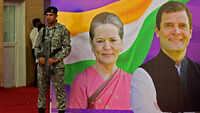
As Congress president, Kharge will have his work cut out for him. He has to revive a party that's losing its political relevance by the day, prevent it from ceding ground to regional heavyweights and figure out how to retain high-profile leaders — all while carefully balancing the relationship with Gandhis.
Here are the key challenges that lie ahead for Congress president Kharge:
Tap to expand and read moreBaptism by fire
One of the immediate challenges before Congress president Kharge will be the upcoming electoral contests in Gujarat and Himachal Pradesh.
The Congress is running a low-key campaign in both the states. According to opinion polls, the BJP is set to retain Gujarat. In Himachal, the contest could be close with the Congress projected to make gains.
With a better-than-expected electoral performance, Kharge can hit the ground running and get a moral boost as the new chief.
However, if the Congress fails to make an impression, it will be baptism by fire for Kharge.
The Congress is running a low-key campaign in both the states. According to opinion polls, the BJP is set to retain Gujarat. In Himachal, the contest could be close with the Congress projected to make gains.
With a better-than-expected electoral performance, Kharge can hit the ground running and get a moral boost as the new chief.
However, if the Congress fails to make an impression, it will be baptism by fire for Kharge.
Settling the Gehlot-Pilot issue in Rajasthan
Another important and immediate task for Kharge would be to settle the infighting in Rajasthan, the shadow of which loomed large even during the Congress presidential elections.
Chief minister Ashok Gehlot and his former deputy and bete noire Sachin Pilot are locked in a fierce tussle for the top post in the state.
Kharge will have to decide on the fate of Gehlot, who was the frontrunner for the party chief's post till a rebellion by his supporters in Rajasthan forced him to opt out.
Gehlot's loyalists were firmly against Pilot's elevation as chief minister and staged a rebellion when there was talk of possible succession if the Rajasthan CM threw his hat in the ring for the Congress presidential elections.
Rajasthan remains firmly in his grip.
Earlier this month, Gehlot had said that young leaders will get their chance when the time comes, indicating that he is in no mood to vacate the post anytime soon.
But at the same time, the Congress cannot afford to lose Pilot, who has already threatened to quit once during his rebellion in 2020.
It has already lost one young leader in Jyotiraditya Scindia, whose defection to BJP led to the fall of Congress government in Madhya Pradesh.
For Kharge, the challenge will be to defuse the situation in the state before it turns into yet another full blown crisis like in Punjab.
Fighting the tag of Gandhis' 'remote control'
One of the running challenges Kharge will face during his presidency will be to retain his independent authority and not turn to the Gandhis before taking every single decision.
While this may seem rather difficult, given how Congress leaders have vociferously pledged loyalty to the "high command", Kharge will have to at least build a perception that as Congress chief, the buck stops with him and not at 10, Janpath.
In the run up to the elections, Kharge sought to dismiss the BJP's charge that he will be nothing but a "remote control" of the Gandhi family.
"A lot of people say I am a remote control and work from behind. They say I will do what Sonia Gandhi will say. There is no such thing as remote control in Congress, people take decisions together. It is your thinking. A few people are creating this idea," Kharge said.
He added that decisions would be taken by "our committee, elected members, working committee and parliamentary board".
But how much and how often will the Gandhis influence the decisions? That remains to be seen.
While this may seem rather difficult, given how Congress leaders have vociferously pledged loyalty to the "high command", Kharge will have to at least build a perception that as Congress chief, the buck stops with him and not at 10, Janpath.
In the run up to the elections, Kharge sought to dismiss the BJP's charge that he will be nothing but a "remote control" of the Gandhi family.
"A lot of people say I am a remote control and work from behind. They say I will do what Sonia Gandhi will say. There is no such thing as remote control in Congress, people take decisions together. It is your thinking. A few people are creating this idea," Kharge said.
He added that decisions would be taken by "our committee, elected members, working committee and parliamentary board".
But how much and how often will the Gandhis influence the decisions? That remains to be seen.
What about Rahul Gandhi
Congress president or not, Rahul Gandhi has seldom played by the rules of the party.
From tearing up an ordinance in 2013 when Manmohan Singh was PM to appointing his coterie of leaders to key positions, he has remained the de facto boss of the Congress ever since he took the plunge.
Therefore, any key policy change will need Rahul's stamp of approval, especially since Sonia is unwilling to remain at the helm of affairs due to poor health.
For Kharge, this could be a tricky task as playing second fiddle to Rahul will marginalize his importance as the president. In case he wishes to make key organisational changes by himself, he will have to strike a delicate balance to avoid antagonizing the Gandhis.
Congress-jodo mission
Rahul Gandhi may have embarked on a multi-state Bharat-jodo mission, but what the grand old party really needs is a Congress-Jodo mission.
Since the 2014 Lok Sabha defeat, the Congress has experienced a mass exodus of senior leaders - the latest being Ghulam Nabi Azad.
At least 460 leaders left Congress between 2014 and 2022.
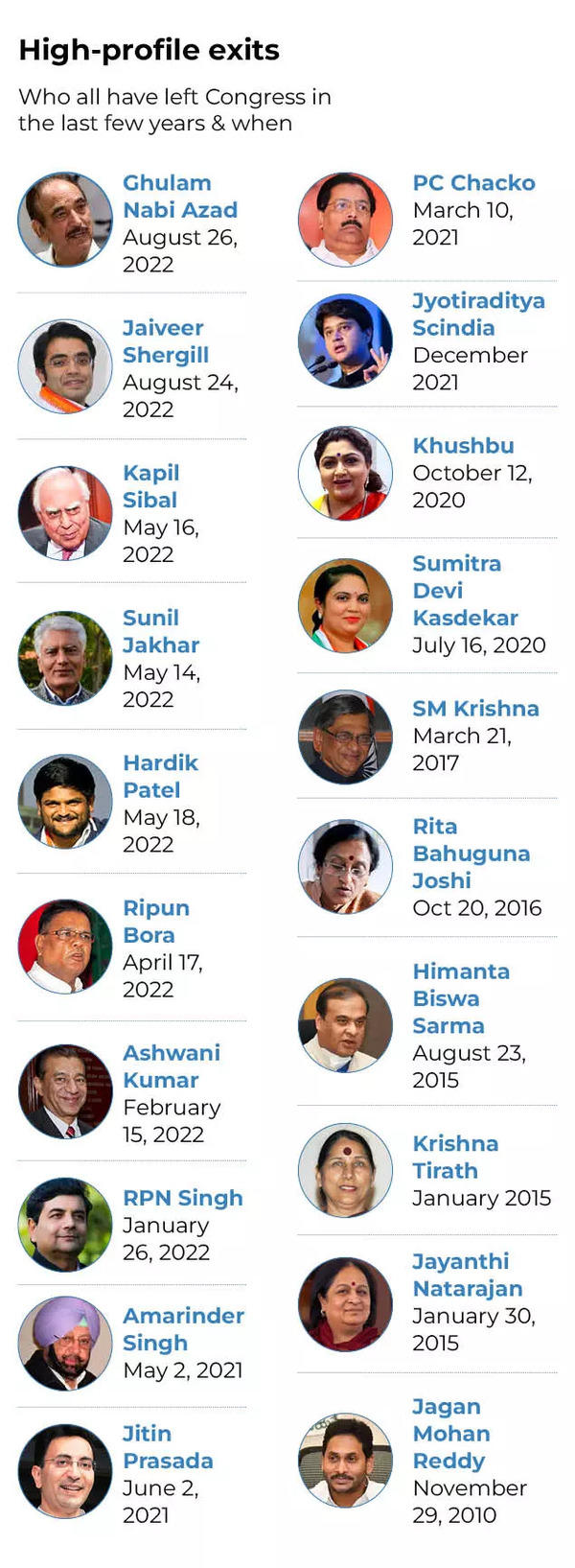
Around 177 MPs/MLAs left the party during elections, while 222 electoral candidates left the Congress for other parties.
The leaders have quit Congress over multiple issues, from being unhappy with the style of functioning to not getting enough importance in the party.
Eventually, most of these defections have ended up hurting the party in some way or the other.
In the longer run, Kharge will have to find a way to stem these defections and ensure harmony between the old guard and the new.
The ideological challenge
The Congress, which over the years positioned itself as a secular party, today seems a bit directionless ideologically.
In an effort to counter the BJP, Rahul and other Congress leaders have pivoted to the Soft Hindutva approach in the last few years.
It also forged an alliance with the Shiv Sena in Maharashtra, a party diametrically opposite to Congress's ideals.
But the ideological pivot is a bit half-measured since the party also cannot afford to alienate the minorities - who have been its core voter base for decades.
As Congress president, Kharge will have to find an ideological sweet spot for the party to ensure that it manages to counter the BJP even while retaining the support of its core voter base.
An AAP-hill task
Due to Congress's terminal decline in Indian politics, there has been a huge vacuum in the national political space.
With the BJP rooting itself as a dominant national force, no other party has managed to come close to being a viable alternative.
In the current scenario, the Aam Aadmi Party (AAP) is now slowly emerging as the national alternative - not of BJP but of the Congress.
Like Congress, the AAP also has governments in two states. It is now eyeing gains in Himachal Pradesh and Gujarat.
With more electoral successes, the Arvind Kejriwal-led party can slowly emerge as the principal challenger to the BJP, pipping the Congress in the race.
Kharge's assignment would be to revive Congress as quickly as possible, especially in states where it is in a direct fight with the BJP, and thwart AAP's bid to dislodge it as the prime contender.
Primus inter pares
The Congress also needs to protect its position as the top opposition party in the country if it hopes to reclaim power someday.
On paper, it is still the biggest vote garner in India after the BJP.
In the 19 assembly elections since 2019, the party has secured over 4.6 crore votes and sent 248 MLAs to various state assemblies.
At the national level too, the Congress is the only party that comes close to being a threat to the BJP. In 2019, it secured nearly 19.5% of the total votes and won 52 seats.
Even though its seat tally is just one-sixth of BJP's 303, the grand old party still ranks as the second best in the country in terms of vote and seat share.
The third-largest party on the list is Mamata Banerjee-led TMC, which won 22 seats with a vote share of just over 4%. Moreover, all the seats won by TMC were in West Bengal.
This shows that Congress has a bigger footprint at the national level than what the numbers show.
However, if the erosion of votes continues and the party fails to consolidate its gain, it will eventually cede the space to some other party. AAP, as mentioned, is already eyeing that spot.
Preparing for Mission 2024 Lok Sabha elections
The biggest challenge for Kharge will be the Lok Sabha elections in 2024, which are a little over a year away.
After a massive drubbing in both 2014 and 2019 general elections, Congress will definitely eye a larger seat share in 2024.
As party chief, Kharge will have to take some tough calls on joining alliances.
Opposition leaders like Nitish Kumar, Sharad Pawar and K Chandrashekar Rao are working hard to establish an anti-BJP front comprising major political parties.
Nitish had earlier said that Congress will be an important part of any such front.
Under Kharge, the grand old party will have to deftly handle the task of forming crucial political alliances in a way that benefits the party.
A functioning organisation
The Congress has been called a sinking ship not just by its political opponents but also by the several leaders who have quit the party in the last few years.
Congress as an organisation has failed to make a mark and has been often missing in action.
The leadership has failed to inspire the cadres and as a result the party may not have enough workers on the ground to implement the revival plan.
The assembly election results in Uttar Pradesh could be a case in point where despite a massive effort by Priyanka Gandhi the party registered one of its worst performances in the state.
Kharge has the tough job of rallying the troops. He will also have to create an organisational apparatus that functions. If Kharge is able to get that done, Congress will have a chance to do well in crucial elections lined up in the next 2-3 years.
End of Article
FOLLOW US ON SOCIAL MEDIA








Hot Picks
TOP TRENDING
Popular Categories
Hot on the Web
Top Trends
Israel Hezbollah WarTirupati Laddu Case HearingKolkata Doctor Rape HearingIND vs BAN Live ScoreRohit SharmaIftikhar AhmedMayank YadavUGC NET Result 2024TS DSC Results 2024Women T20 World Cup Points TableWomen T20 World Cup ScheduleShane McMahon Net WorthHezbollah ChiefEarth Mini MoonDiddyTop Management Colleges of IndiaLive Cricket Score
Trending Topics
Devara CollectionMithun ChakrabortyKangana RanautPark Ji AhStree 2 OTT ReleaseAnant AmbaniDevara CollectionOTT Release MovieMasala OmeletteEmergencyDevaraTaaza Khabar 2 Twitter ReviewDevara Movie ReviewHealthy RaitasSwatantrya Veer SavarkarColdplay India tour 2025Smartphone DealsApple Macbook Air M1Amazon SaleWordle Answer
Living and entertainment
Latest News
The Power of Color: Zodiac Signs and Their Energetic Hues'For the next 10 years, we've got players who will make our country proud' says VVS Laxman on bench strengthBarbra Streisand pays tribute to late 'A Star Is Born' co-star Kris Kristofferson: 'He was something special'Sasikumar and Simran join hands for a feel-good, city-based entertainerCovid lockdown on earth led to dip in Moon's temperature: StudyQueen Camilla does not want King Charles to meet Prince Harry because...From A.R. Rahman to Satyajit Ray: Indian Oscar winners who made historyWatch: Jasprit Bumrah’s lethal inswinger shatters Mushfiqur Rahim’s off stumpManipur CM Biren accuses Kuki militants of abducting 2 Manipuri youthsPaul Heyman opens up on declining TNA offer after leaving WWEFun-filled inside pictures from Inaaya Naumi’s 7th birthday party with Kareena Kapoor, Saif Ali Khan, Taimur, Jeh, Soha, Kunal Kemmu and more family membersBCCI's Centre of Excellence opens up new possibilitiesBigg Boss 18 Promo: Salman Khan reveals the theme of the season by predicting the contestants' future in the houseIndia’s choking beyond Delhi: Byrnihat shows we have a big unnoticed pollution problemHow NFL Players Juggle Family Life and a Demanding CareerThe Role of Family Support in the Success of NFL Players"I feel terrible for Rashee": Chiefs Coach Andy Reid offers insight into Rashee Rice’s knee status post-winVice-presidential debate between Tim Walz and JD Vance: When and where to watch
Copyright © 2024 Bennett, Coleman & Co. Ltd. All rights reserved. For reprint rights: Times Syndication Service